


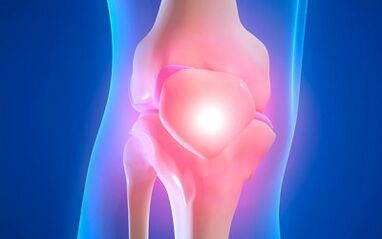
Among the group of diseases of the musculoskeletal system caused by degenerative dystrophies, arthritis of the knee predominates.
Knee arthrosis or arthropathy is a disease associated with the slow destruction of articular cartilage tissue, the pathological process of which involves the entire joint, including ligaments, synovium, subchondral bone and other components of the joint.
Under the influence of various factors, such as infectious diseases (cold, flu, typhoid, tuberculosis, syphilis, sore throat, etc.), injuries, functional congestion of the joints (e.g. athletes, workers engaged in heavy physical labor, ballet dancers), the nutrition (nutrition) of the cartilage tissue of the knee joint is destroyed, resulting in the thinning and destruction of the cartilage, and sometimes its complete disappearance.
Who is at risk?First, women over forty are at risk of knee arthritis; the condition occurs in them twice as often as in the stronger half of the human race.Additionally, women who are prone to being overweight or obese are at increased risk.
But in general, knee joint disease is a disease of the elderly.There is a simple explanation for this.As you know, cartilage tissue is composed of approximately 70-80% water, making it very absorbent.In addition, in youth, "regenerative" cells, cartilage cells, actively work.As we age, water levels begin to decrease, causing the joint's cushioning capacity to decrease. Cartilage becomes dry, brittle, and cracked, and existing cartilage cells don't have time to repair the damage.In many ways, this explains the development of arthroarthritis of the knee.
disease cause
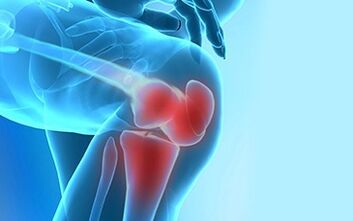
Predisposing factors include excess weight, physical inactivity, chronic joint injury or systemic microtrauma to the joints, alcohol abuse, chronic stress, and previous or existing knee disease, such as:
- knee arthritis,
- Sprain, partial or complete ligament rupture,
- intra-articular fracture of the femur or tibia,
- Metabolic disorders such as gout and many other pathological conditions.
Many times, it is impossible to identify any one specific cause of knee arthritis.In this case, they are talking about a combined cause, that is, knee joint disease is the result of several diseases occurring at the same time.
Furthermore, the disease is generally divided into two forms based on the reason why it occurs: primary and secondary.
The causes of primary arthropathy are age and the presence of related factors such as:
- professional quality,
- overweight
- obesity,
- Varicose veins of lower limbs.
Secondary knee arthropathy may be caused by a previous injury to the knee (fracture, ligament rupture) and is called post-traumatic arthropathy of the knee.The cause may also be a previous infectious disease or inflammation of the knee joint.
symptom
Symptoms of knee arthritis do not appear overnight; the disease develops gradually, often over months or even years.Significant pain is constant and worsened by physical activity such as walking, running, and climbing stairs.Another characteristic symptom of this disease is crepitus in the joints, which may be a cracking or crunching sound in the knee.
Common manifestations of knee joint disease are:
- An increase in localized temperature (the joint feels hot to the touch) or an increase in overall temperature,
- The presence of joint swelling,
- increase its volume,
- Difficulty moving,
- The joints deform and subsequently the limb bends.
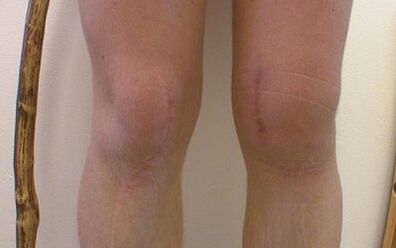
As the disease progresses, when cartilage tissue is completely destroyed, the body has no choice but to begin its own defense.This occurs when bone tissue on the bones that form the joint grows in the form of "spikes" (osteophytes) and deforms the knee joint.Exudate appears in the joint cavity.
Depending on the size and degree of deformation of the osteophytes, several degrees of knee arthropathy can be distinguished:
- Grade 1 knee arthropathy.The patient experiences joint stiffness and mild pain in the morning or when sitting or standing for long periods of time.There is no deformation of the joint at this stage and mobility is fully preserved.X-ray showed a small osteophyte.
- Secondary knee arthrosis.Pain not only occurs in the morning, but also occurs after long-term exercise; joint deformation and joint surface enlargement lead to an increase in joint volume, difficulty in bending, and a creaking feeling during movement.X-ray showed significant osteophytes and the joint space was unchanged.
- Knee arthritis 3rd degree.The symptoms are the same as the second degree, but the symptoms are more obvious.The pain persists and does not subside even during rest and sleep.Joint function is almost completely lost; the patient can neither bend nor straighten the leg.As a result, a limp develops and movement is possible only with the help of crutches or assistance.The knee joint is severely deformed.X-rays show slight narrowing of the joint space.
- There is also a fourth stage, in which the affected joint is completely immobilized and further deformed.X-rays show subchondral bone sclerosis and marked narrowing of the joint space.
Treatment of knee arthritis
For good treatment results, you should seek help from a qualified rheumatologist or, if he is not present, a therapist, as they know how to treat arthrosis of the knee.Under no circumstances should you try to treat yourself, as this will only make an already bad situation worse.Before starting treatment, it is extremely important to make a correct diagnosis, as a correct diagnosis is the key to successful treatment.
Treatment of knee arthritis is a rather lengthy process and depends on many factors (type of joint disease, cause of joint disease, extent of the disease).Treatment is complex and includes medications and non-drug treatments, and in some cases surgery is required.
Medical treatment of knee joint disease is mainly aimed at relieving the main manifestations of the disease, such as:
- pain;
- Inflammation of joints and periarticular tissues.
In addition to relieving disease symptoms, medications are used to:
- Restoration of joint tissue,
- Improve its nutrition and blood circulation,
- Enhance the body’s defense capabilities,
- Eliminate allergic reactions.
To relieve pain symptoms, a variety of non-narcotic analgesics may be used; in rare cases, narcotic analgesics are used short-term.The most commonly used medications are nonsteroidal anti-inflammatory drugs.They have a combination of anti-inflammatory, analgesic and antipyretic effects.
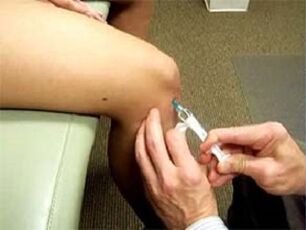
Chondroprotectants are used to restore cartilage tissue and improve joint mobility.These drugs stimulate the activity of chondrocytes - cartilage cells - and help them restore tissue.Good results can be achieved when chondroprotectants are given intra-articularly.In recent years, a new and effective product based on hyaluronic acid has emerged.Because of its action, this drug is called a "liquid prosthetic."When injected into a sore joint, the drug forms a protective film over the damaged cartilage and gradually restores the joint's normal lubricating properties.
Muscle relaxants are used to relieve muscle spasms; in addition to their relaxing effect, they also have a positive effect on blood circulation in the affected joints.
Among non-pharmacological methods of treating knee joint disease, manual and physical therapy are widely used.Magnetic therapy, acupuncture, electrophoresis massage, hardware traction (joint traction), etc. are the most important.More recently, the practice of treating joint disease has included methods such as laser therapy and cryotherapy (exposure to liquid nitrogen).In addition to physical therapy, exercise therapy also has good results for knee arthritis.Exercise therapy uses various physical exercises to achieve therapeutic purposes.
Gymnastics treats knee joint disease
During a disease attack, physical stress on the affected joints should be kept to a minimum.You should not run, jump, lift weights, briskly walk, or squat.Knee exercises can be performed only after completing a course of treatment and under the supervision of the attending physician.
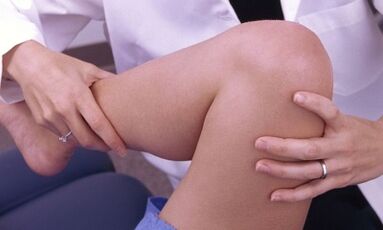
It is necessary to choose exercises that will help strengthen the muscles and ligaments of the affected knee joint, but will not cause hypermobility of the joint.That is, exercises should be performed with minimal dynamic activity.It is useful to perform exercises that stretch the ligaments and joint capsules.The rules here are the same, practice gently, not hard.
When performing any gymnastics exercise, it is important to follow some rules:
- Don’t exercise while overcoming pain,
- If an exercise causes pain, it should be replaced with another, gentler exercise.
Knee joint massage has a beneficial effect on the recovery of knee joint function.In exposed areas, blood vessels dilate, blood circulation improves, and metabolism accelerates.Massage procedures can improve lymphatic flow, which can help eliminate residual inflammation.Massage strengthens the muscular system, increases oxygen flow, improves gas exchange, normalizes muscle tone, and increases plasticity.
Diet for knee arthritis
Recently, medical experts have discovered that the occurrence of knee joint disease is not directly related to nutrition.However, it is an undisputed fact that the development of joint disease is greatly influenced by excess body weight in the human body.If the cause of the disease is excess weight, then obviously the nutrition of the knee joints should be aimed at gradual weight loss.This requires changing eating habits and changing diet structure.Food should be low in calories and fried and high-fat foods should be eliminated from the diet.Eat more vegetables, fruits and fluids.
Prevent knee arthritis
In order to keep your joints healthy for as long as possible, regular physical exercise and gymnastics are necessary, but you should not get too carried away and overload the joints.Swimming provides the best results with minimal stress on your joints.If you play professional sports, you must use joint protection.It is useful to alternate physical activity with rest; you should not remain motionless for long periods of time.
Following all these simple rules, along with a healthy lifestyle and proper nutrition, will not let knee arthritis ruin anyone's life.